b.
Loading Content

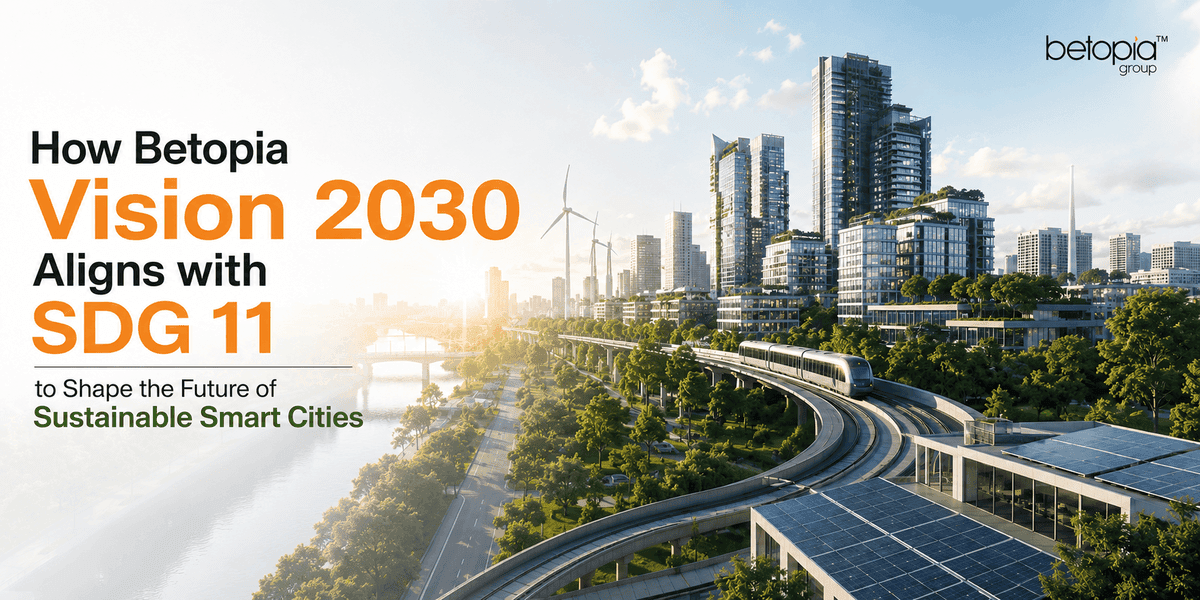
What makes a city truly sustainable? Is it smart technology, green buildings, or something much bigger?
Most people think a sustainable city is full of electric buses, solar panels, and modern buildings. While these are important, they are only part of the story.
An actual sustainable city is a place where people can live safely, travel easily, breathe clean air, find affordable homes, and enjoy a better quality of life. Technology helps make this possible, but it cannot solve every problem on its own.
That is exactly what Sustainable Development Goal (SDG) 11 is about.
Created by the United Nations in 2015, SDG 11 aims to make cities and human settlements inclusive, safe, resilient, and sustainable by 2030. It is not just about building smarter cities. It is about building better places for people to live, work, and grow.
This is also where long-term innovation, education, and responsible technology become important. While Betopia Vision 2030 is not an official SDG initiative, many of its ideas naturally support the same long-term goals by focusing on research, digital transformation, engineering, and talent development.
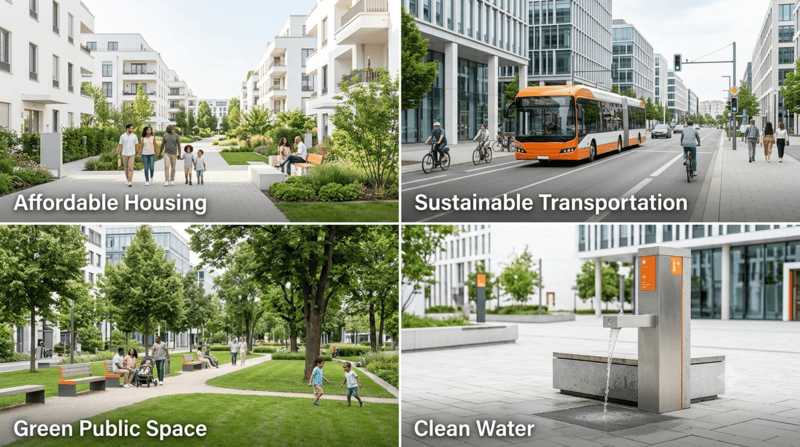
Think of a city as a giant home shared by millions of people.
For that home to work well, everyone should have:
These are the real goals of SDG 11.
Many people ask, "Is SDG 11 only about smart cities?"
The answer is no.
Smart technology is only one tool. The goal is to improve people's everyday lives. A city with advanced technology but poor healthcare, unsafe roads, or expensive housing cannot truly be called sustainable.
That is why SDG 11 includes multiple targets covering housing, transportation, disaster preparedness, environmental protection, cultural heritage, and better urban planning.
Today, more than half of the world's population already lives in cities. By 2050, that number is expected to reach nearly 70%.
This means cities will continue growing rapidly.
More people need more homes, more schools, more hospitals, better roads, cleaner transportation, stronger digital infrastructure, and better public services.
Without careful planning, cities can quickly become overcrowded, polluted, and difficult to live in.
That is why SDG 11 is one of the most important goals in the United Nations 2030 Agenda. It helps governments, businesses, and communities prepare for the future instead of simply reacting to problems after they happen.
Building a sustainable city is not easy.
Many cities around the world face similar problems every day.
Some people cannot afford proper housing. Public transportation becomes crowded. Roads become congested. Air pollution increases. Floods and heatwaves become more common because of climate change.
Many developing countries also face another challenge which is a growing digital divide. Some communities have access to modern technology, while others still struggle to access basic digital services.
These challenges cannot be solved with one app or one software platform.
They require good planning, strong leadership, continuous investment, and collaboration between governments, businesses, educational institutions, and local communities.
Real progress takes years, not weeks.
When people hear the words "smart city," they often imagine AI, sensors, cameras, robots, and automation.
These technologies are exciting, but they should never become the main goal.
The most successful cities always focus on people first.
Technology should help people travel safely, receive healthcare faster, access education more easily, and enjoy a cleaner environment.
If technology only improves efficiency but leaves many people behind, it has missed the true purpose of SDG 11.
In other words, technology should support people but not replace them.
This simple idea is one of the most important lessons behind sustainable urban development.
Although technology is not the entire solution, it plays an important role in helping cities grow more efficiently.
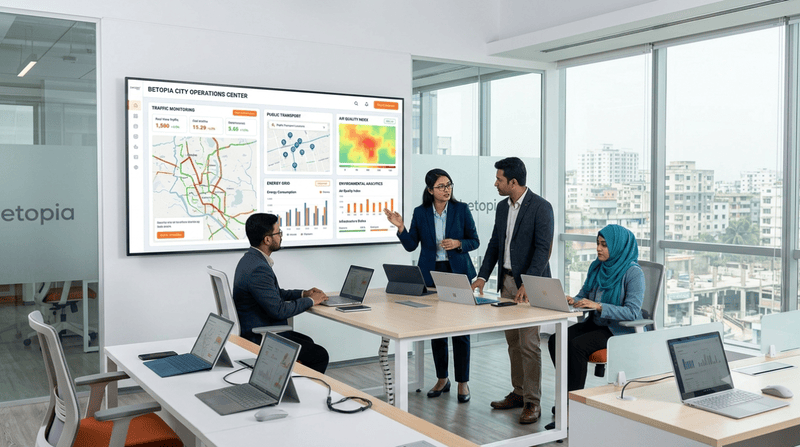
Cloud platforms allow different government departments to share information quickly.
Artificial Intelligence (AI) helps manage traffic, reduce energy waste, and improve city services.
Internet of Things (IoT) sensors can monitor air quality, detect floods early, and provide real-time information that helps cities respond faster during emergencies.
Cybersecurity is equally important because connected systems must remain safe from cyber threats.
At the same time, digital governance ensures that data is collected, stored, and used responsibly. Citizens need to trust that their personal information is protected while technology improves public services.
Bangladesh is growing quickly. Cities like Dhaka welcome thousands of new residents every day. This creates pressure on housing, transportation, healthcare, and public infrastructure.
At the same time, Bangladesh faces climate-related challenges such as flooding, rising temperatures, and natural disasters.
Instead of upgrading outdated systems later, Bangladesh can continue investing in modern digital infrastructure from the beginning. Better planning, stronger digital services, and skilled professionals can help build cities that are smarter, safer, and more prepared for the future.
However, technology alone is not enough. Sustainable progress also depends on good governance, quality education, skilled engineers, and long-term planning.
Installing advanced technology is only the first step.
The bigger challenge is maintaining, improving, and expanding those systems over time.
Imagine a city buying expensive software but having no trained people to operate or upgrade it. Eventually, the system becomes outdated, and the investment loses its value.
That is why innovation ecosystems are so important.
An innovation ecosystem brings together education, research, engineering, business, and technology in one connected environment. Universities produce skilled graduates. Researchers develop new ideas. Companies build practical solutions. Together, they create knowledge that continues growing for many years.
This approach builds local talent instead of depending only on outside expertise.
In the long run, this creates stronger and more resilient cities.
SDG 11 is not simply about building smart infrastructure. It is about helping communities develop the knowledge and skills needed to improve their cities for generations.
Although Betopia Vision 2030 is not an official United Nations SDG initiative, its long-term vision naturally aligns with many of the principles behind SDG 11.
Rather than focusing on one product or one technology, Betopia Vision 2030 promotes innovation through education, engineering, research, digital transformation, and collaboration.
One example is Betopia Tech City.
Instead of trying to become a smart city itself, Betopia Tech City is designed as a self-contained technology campus where AI, cloud computing, cybersecurity, software development, education, healthcare, and research work together in one environment.
This approach helps develop skilled professionals, encourages innovation, and supports long-term technological growth.
As more businesses, researchers, educators, and technology experts collaborate, they create solutions that can contribute to smarter organizations and, over time, support broader sustainable development goals.
This is why Betopia Vision 2030 focuses not only on building technology but also on building people, knowledge, and innovation for the future.
Many people ask, "Can one company achieve SDG 11?"
The answer is No.
Creating sustainable cities requires governments, businesses, universities, communities, and citizens to work together.
Another common question is whether technology alone can solve urban challenges.
Again, the answer is No.
Technology is a powerful tool, but it works best when combined with strong leadership, responsible governance, quality education, environmental planning, and community participation.
SDG 11 reminds us that the future of cities is about much more than digital innovation. It is about creating places where everyone can live safely, travel easily, access opportunities, and enjoy a better quality of life.
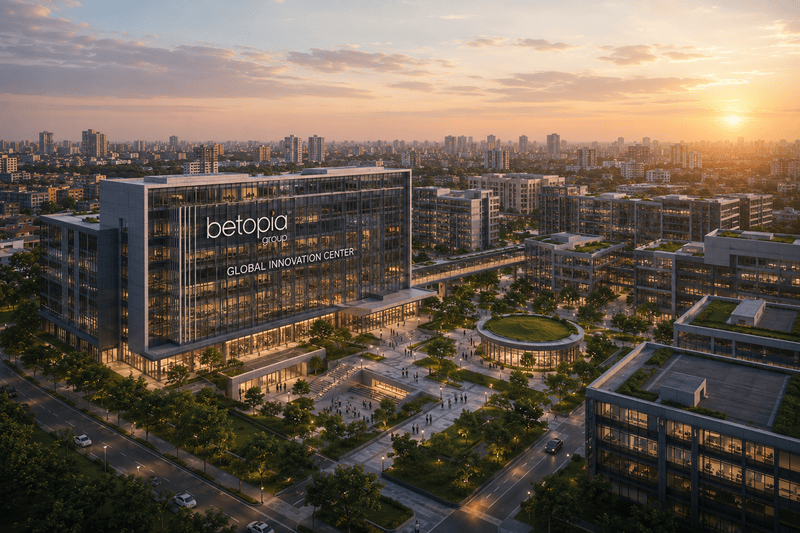
As cities continue to grow, the decisions we make today will shape how future generations live tomorrow.
Organizations that invest in education, research, engineering, and responsible technology can play an important role in supporting this journey.
This is where Betopia Group is working toward a long-term vision.
Through Betopia Vision 2030, the company aims to build an innovation-driven future by bringing together AI, cloud technologies, cybersecurity, software development, education, healthcare, and research under one collaborative ecosystem. Its vision is not to claim ownership of SDG 11, but to contribute to the broader goals of sustainable development by empowering people, developing local talent, and advancing responsible digital transformation.
Building sustainable cities is not the responsibility of governments alone. It requires innovators, educators, businesses, and communities to work together with a shared purpose.
At Betopia Group, we believe the future is built through innovation, collaboration, and continuous learning. By investing in people as much as technology, Betopia Vision 2030 seeks to help create a smarter, more sustainable tomorrow, one innovation at a time.


Found this interesting? Share it with your network.
Join our global AI partnership network and build the future together.
Get Started