b.
Loading Content

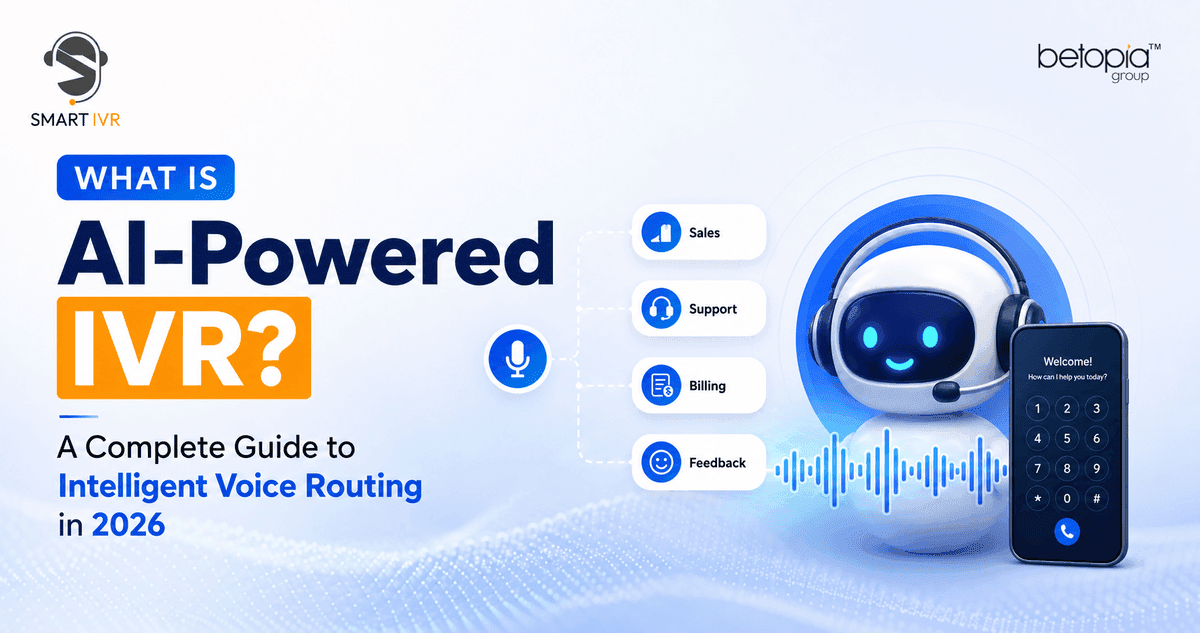
Have you ever called a business and heard:
“Press 1 for Sales. Press 2 for Support. Press 3 to hear these options again.”
You choose an option. Then you wait. You may even get transferred to another person and have to explain your problem all over again.
This is a traditional IVR (Interactive Voice Response) system.
IVR has been helping businesses manage phone calls for decades. But traditional IVR has one big problem: it expects people to follow the system instead of understanding what people actually need.
That is changing with AI-powered IVR.
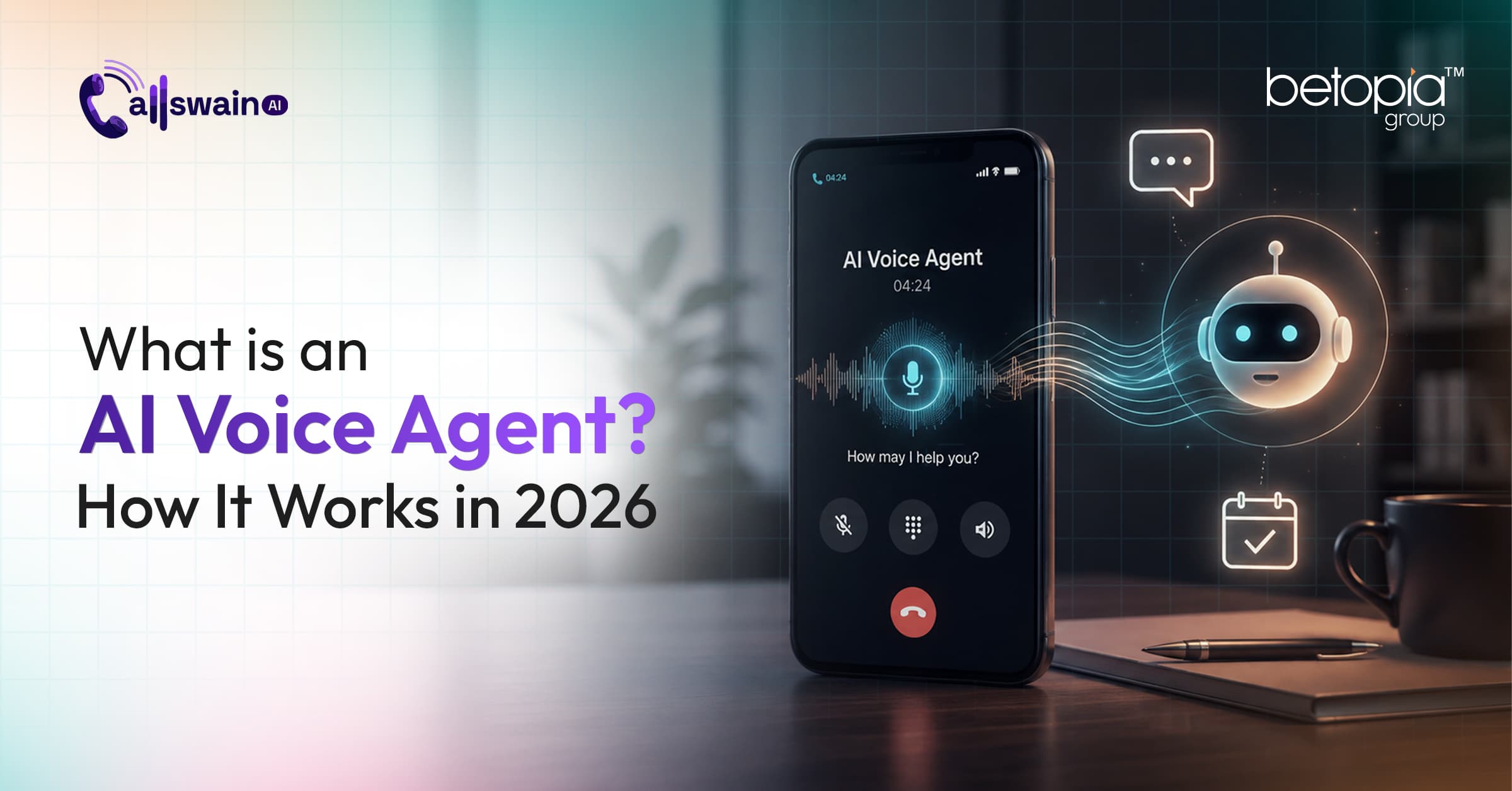
Also called Smart IVR or an AI voice agent, this technology can listen to what a caller says, understand the request, make decisions, answer questions, and send the call to the right person when needed.
In simple words, Smart IVR makes business phone systems easier for both customers and employees.
Let's see how it works and why it matters in 2026.
AI-powered IVR is a smart phone system that uses artificial intelligence to understand spoken requests and decide what should happen next.
Instead of asking callers to choose from a long list of buttons, it lets them speak naturally.
For example, a caller might say:
“I need to move my appointment to Friday.”
The AI can understand the request and check what should happen next.
If it is connected to a calendar, it may check available times and help reschedule the appointment.
If the request needs a human, it can send the caller to the correct employee.
So instead of:
Caller → Menu → Button → Department → Transfer → Employee
the experience can become:
Caller → AI understands the request → AI solves or routes it
That is the basic idea behind Smart IVR.
AI-powered IVR combines several technologies to create a more natural phone conversation.

The real value of Smart IVR becomes clear when you look at everyday business tasks.
An AI voice agent can greet callers, understand why they are calling, and either answer the question or send the call to the correct team.
This can reduce unnecessary transfers and help employees spend more time on important conversations.
Imagine someone calls your business because they are interested in your service.
Instead of immediately sending the call to a salesperson, the AI can ask basic questions such as:
The sales team can then receive a better-qualified lead.
Appointment scheduling is one of the clearest uses for AI voice agents.
When connected to a calendar such as Google Calendar, the AI can check available times and help callers:
This can save both customers and employees time.
What happens when someone calls at 10 p.m.?
With a traditional system, the call may go to voicemail.
An AI voice agent can continue handling routine requests after business hours.
It can answer common questions, collect information, schedule appointments, or create a callback request.
This gives businesses a way to provide support beyond normal working hours.
Not every call should be handled by AI.
Some conversations need a real person.
A good AI voice system should recognize when a request is too complex, sensitive, or outside its capabilities.
It can then transfer the caller to the right employee with useful information about the conversation.
That means AI does not have to replace your team.
It can help your team focus on the calls that need human attention.
Customer expectations have changed.
People are used to getting quick answers from search engines, chatbots, and AI assistants.
They don't want to spend 5 minutes listening to phone menus just to find the right department.
AI-powered IVR can help businesses create a faster and simpler phone experience.
The biggest benefits include:
The biggest difference is simple:
Traditional IVR follows a menu. Smart IVR understands a conversation.
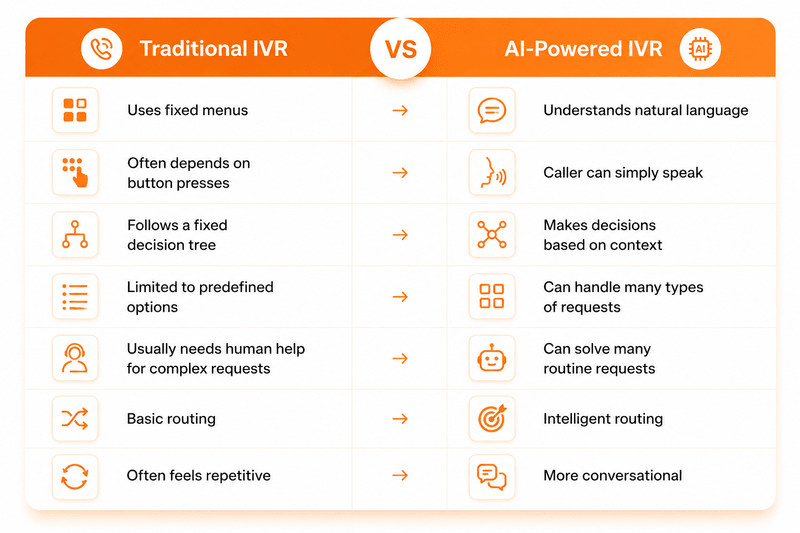
But when businesses want a better customer experience, AI-powered IVR can provide a much more flexible approach.
AI-powered IVR is more than a replacement for the old “Press 1, Press 2” phone menu.
It changes the way businesses think about phone conversations.
Instead of making customers learn how your phone system works, the system can learn what the customer needs.
That is the real promise of Betopia IVR.
And as voice AI continues to improve, businesses will be able to connect phone conversations with calendars, CRMs, customer support platforms, internal knowledge bases, and other business systems.
The result can be a phone experience that is faster, more useful, and easier to manage.
The future of voice automation isn't only about having an AI that can talk.
It's about having an AI that can understand, act, integrate, and know when a human should take over.
That's the approach behind Betopia Group's Smart IVR solution.
Betopia Group offers a no-code voice agent platform designed to help organizations build and manage AI-powered phone experiences without requiring everything to be developed from scratch.
Betopia Group can help you move from traditional phone trees to smarter AI-powered conversations.
It isn't about replacing people.
It's about giving people a smarter system to work with.
And in 2026, that may be one of the most practical ways businesses can use AI.

Found this interesting? Share it with your network.
Join our global AI partnership network and build the future together.
Get Started