b.
Loading Content

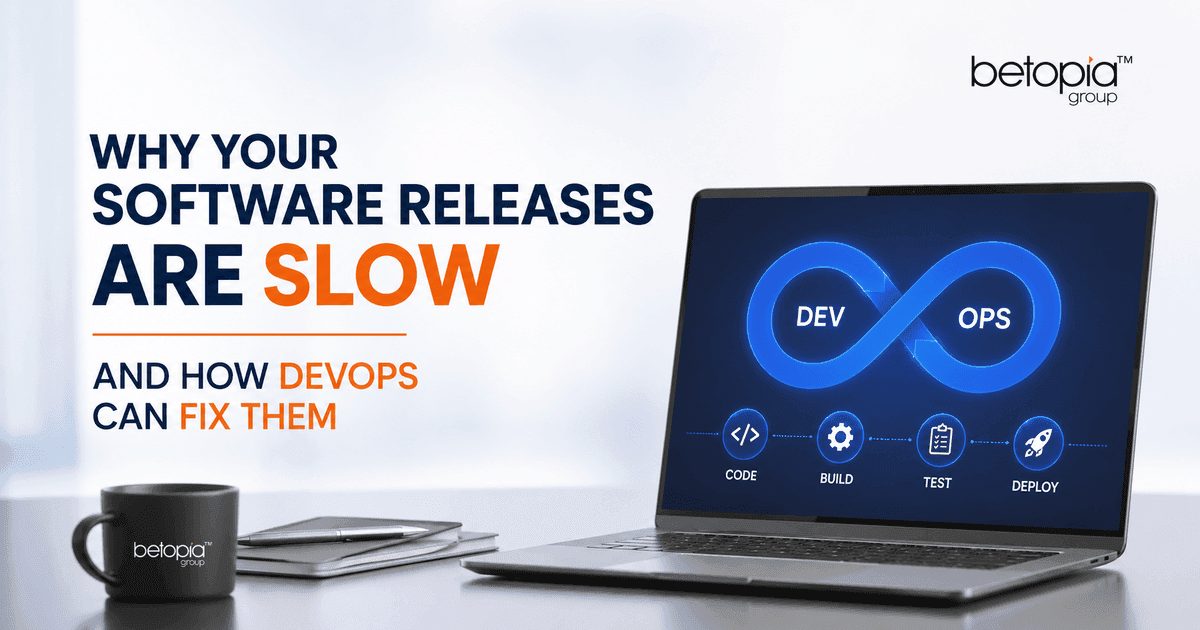
Why Hand-Done Software Releases Cause Trouble
You finished your software update on Friday.
Monday morning, the problems start.
Three angry messages.
One unhappy customer.
And no one can tell which change broke everything.
The setup that worked perfectly in testing never made it to the real system.
This happens more often than most companies like to admit.
It wastes time, money, and trust.
Why Doing Releases by Hand Keeps Hurting Teams
When people push out software by hand, three quiet problems keep appearing.
First, it is slow.
Someone has to click through many steps. Teams ship less often. That means big, risky changes instead of small, safer ones.
Second, it is messy.
A server set up by hand today almost never matches one set up three months ago. Tiny differences grow. Then something that worked in testing fails in real life for reasons no one can explain.
Third, it is hard to track.
When something breaks, finding exactly what changed becomes a long search instead of a quick check.
None of this is the team’s fault.
It is the process. People are not built to do the same careful steps the exact same way every single time.

CI/CD means the computer does the work for you.
Every time someone changes the code, a set of automatic steps tests it, builds it, and can even put it live. Same steps. Same order. Every time.
Think of it like a factory line instead of one person building everything by hand.
The factory line is faster and more consistent.
Small updates go out often.
Problems get caught early.
If something goes wrong, it is easier to fix because the change is small.
CI/CD decides what gets shipped.
Infrastructure as Code decides where it runs.
Instead of clicking buttons to set up servers, you write the setup in clear instruction files. Tools then build the servers the exact same way every time.
This stops a common problem called configuration drift - when test servers and live servers slowly become different.
With Infrastructure as Code, you can rebuild a whole environment in minutes and it comes out identical.
Many teams still check for security problems at the very end.
By then, fixing a problem is expensive and stressful.
A better way is to put safety checks right inside the automatic steps.
Scans and rule checks run while the code is being built. Problems get found early, when they are cheap and easy to fix.
This approach is often called DevSecOps.

It is especially useful for banks, hospitals, and any company that must follow strict rules.
You do not need to change everything overnight.
Start by looking at your current process:
Then automate one step at a time.
First the automatic pipeline. Later the servers. Then monitoring and safety checks.
Teams that try to do everything at once get overwhelmed. Teams that go step by step keep moving and see real results.
Three Simple Rules That Work
Automation is not just about going faster.
It is about removing the quiet risks that build up when everything depends on one person remembering the right steps.
Ask yourself:
How long does a release take right now?
How often does something go wrong?
How much depends on someone remembering every detail?
Most teams that answer these questions honestly see the same thing, the old way is costing them more than they thought.
Betopia Group helps teams in banking, healthcare, education, and manufacturing make this change.
We build CI/CD pipelines and Infrastructure as Code that fits the way your team actually works, not a one-size-fits-all template.
The result? Faster releases. Fewer surprises. And far fewer Monday-morning fires.




Found this interesting? Share it with your network.
Join our global AI partnership network and build the future together.
Get Started