b.
Loading Content

Somewhere in the world right now, there is a technology park with empty floors.
It has glass walls. Fast internet. A lobby made to impress visitors on opening day. A government minister probably cut a ribbon there once, in front of cameras and a small crowd. Yet if you walked through it today, you might hear your own footsteps.
This happens more often than most people say. A country announces a bold new technology area. Architects compete for the design. Investors are promised a hub of the future. A few years later, the excitement has quietly gone.
It is a question worth thinking about.
We often think that innovation comes from infrastructure from internet cables, tax breaks, and floor space. But infrastructure has never been the hard part.
What is hard to build is the invisible thing that makes people want to stay, learn, argue, fail, and try again, together, inside that concrete.
There is also a quieter cost to these empty buildings that people rarely talk about. Every unused tech park makes the next one harder to fund. It also makes talented people a little more doubtful the next time someone promises a “hub of innovation.” That doubt costs a lot, and it does not show up on any money report.
That invisible thing, the one that decides whether a building becomes special or just sits empty has a name. We call it an ecosystem.
People talk about Silicon Valley so often that the name has almost stopped meaning anything. So let’s ask a better question. Not “what is Silicon Valley,” but “why did it actually work?”
The short answer is that it was not the land, and it was not the weather. It was the way people moved.

In the years after the Second World War, Stanford University told its engineers and researchers to start companies instead of keeping their ideas locked inside the school. Nearby, government research money gave early tech people room to try new things.
But the real power was something more social than money. Engineers who left one company often stayed in the same coffee shops, the same friend groups, and the same neighborhoods as the people they used to work with. Ideas did not stay locked inside one company’s walls. They moved through friendships, rivalries, and job changes.
Researchers who studied this later found a clear difference nearby. Along Route 128, outside Boston, another big technology area grew at the same time. But those companies kept their secrets close and told workers not to switch jobs inside the industry. Silicon Valley did the opposite. It lets knowledge flow between companies almost freely.
You can see the same idea in newer examples, even though each place looks different. The Cambridge Innovation District in Massachusetts did not succeed just because MIT and Harvard were close. It succeeded because biotech researchers, hospital doctors, and startup founders were close enough to meet each other on normal days.
One-North in Singapore was not just a building project with a smart name. Its planners mixed public research labs, universities, and private companies in the same few city blocks. They believed closeness would create teamwork that distance never could.
Station F in Paris also did not become important because of its size, even though it is very large. It became important because it regular mentoring, company partnerships, and shared learning within daily reach of thousands of founders at once.
Take away the location, the money models, and the local politics, and every one of these places shares the same basic pattern. Ideas moved faster because people were close enough, and comfortable enough, to share them before they were finished.
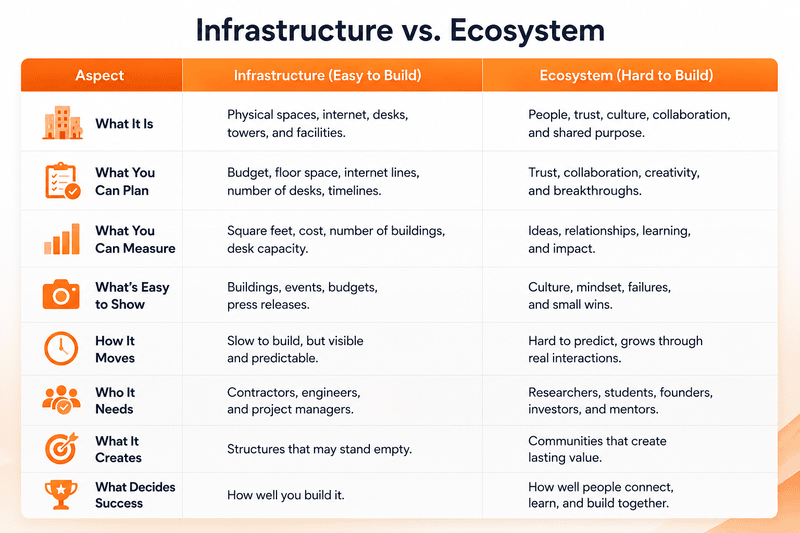
Here is where many national technology plans go wrong, and it is an easy mistake to make, because infrastructure is what governments and companies already know how to build.Let’s show the difference -
This is the exact problem that Betopia Tech City is trying to solve. It is worth being clear about what that means.
Betopia Tech City, a main part of Betopia Vision 2030, is not planned as an office park with a technology theme. It is designed as a shared place where AI research, engineering teams, startups, universities, and companies work inside the same ecosystem.
It means:
There is a phrase Betopia uses inside the company that captures this belief better than any mission statement. Limitless, Together.
There is a reason this talk matters more now than it did ten years ago. It has to do with how Enterprise AI systems are quietly changing what the word “infrastructure” means.
For most of the last 30 years, technology infrastructure meant something physical and mostly finished: servers, networks, office space you built once and then simply used. AI breaks that idea. Company AI systems need constant retraining, constant new data, and constant human judgment about what a model got right and what it got wrong.
That changes what kind of place a company needs to succeed. Three examples make this clear:
This is why the old walls between “research,” “engineering,” and “business” are becoming less useful every year. AI does not reward specialists who work alone in protected groups. It rewards teams that can move easily between fields. An ecosystem built around this kind of flexible teamwork has a real advantage over any single company trying to keep every skill inside itself.
Ask any experienced founder what really limits a company’s growth, and money is rarely the first word. The first word, more often than not, is “people.”
Engineers and researchers move toward places where they can learn from people who are better than them at something specific. They want places where mistakes are treated as part of the process.

This is why a future-ready workforce is not something a company builds only through hiring. It is something an ecosystem builds through constant. A junior engineer who spends a year near senior researchers picks up habits and instincts no course could teach as well. Continuous learning stops being a training program on a calendar. It becomes something that simply happens, almost without anyone noticing.
This is where the compounding effect becomes clear. One team’s breakthrough becomes another team’s shortcut. One startup’s costly failure becomes a lesson a company does not have to learn the hard way years later.
Bangladesh has real strengths here. We have one of the youngest populations in the world. We have a fast-growing digital economy. We have a generation of engineers and developers who have already shown they can compete on global platforms.
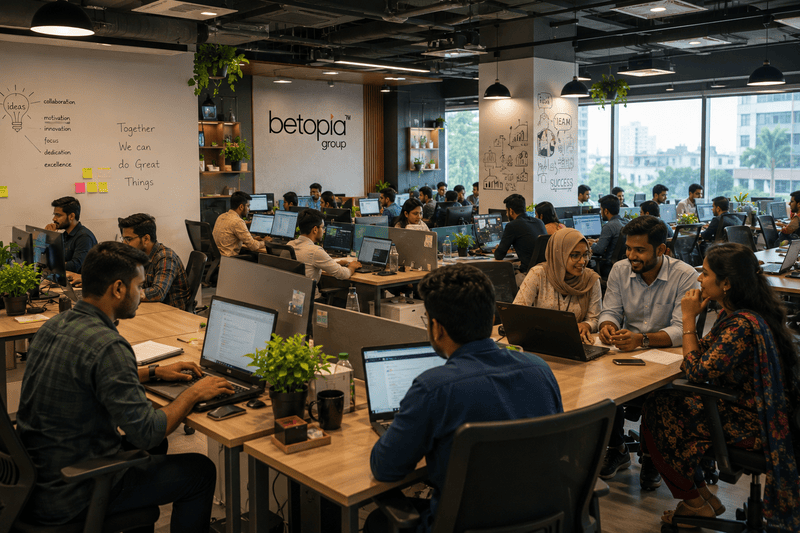
Actually Betopia Tech City, under Betopia Vision 2030, is based on a simple idea: a strong technology ecosystem can be built on purpose instead of waiting decades for it to grow naturally, as Silicon Valley did. This is a bold goal, but success is not guaranteed. Real ecosystems take years to develop. They need enterprises willing to mentor startups that support and mentor startups, not just buy the successful ones. They also need universities that value the companies their graduates create, not only the degrees they award.
The difference between a country that builds infrastructure and a country that builds an ecosystem is the difference between a country. Bangladesh’s wider technology goals will likely depend less on how many buildings rise in the next five years, and more on how many real collaborations happen inside them.
There is a reason the most lasting innovation hubs in history are rarely remembered for one product they made. Silicon Valley is not remembered for one invention. It is remembered for a pattern of people who kept mixing their knowledge, year after year, until something new became almost certain.
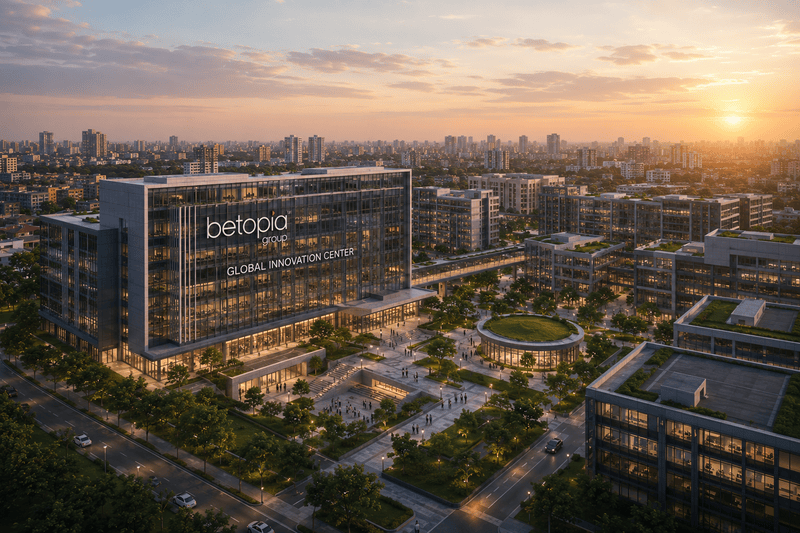
That pattern is open to any place willing to build it honestly. Not by copying a skyline from somewhere else. By copying the trust that made the skyline worth building in the first place.
The future of innovation will not be defined by the tallest buildings or the largest investments. It will be defined by people who choose to learn, build, and grow together. That is the future Betopia Tech City is working toward. Limitless, Together.


Found this interesting? Share it with your network.
Join our global AI partnership network and build the future together.
Get Started